Aviation Knowledge
Flight Mechanics: Axes, Stability & Control
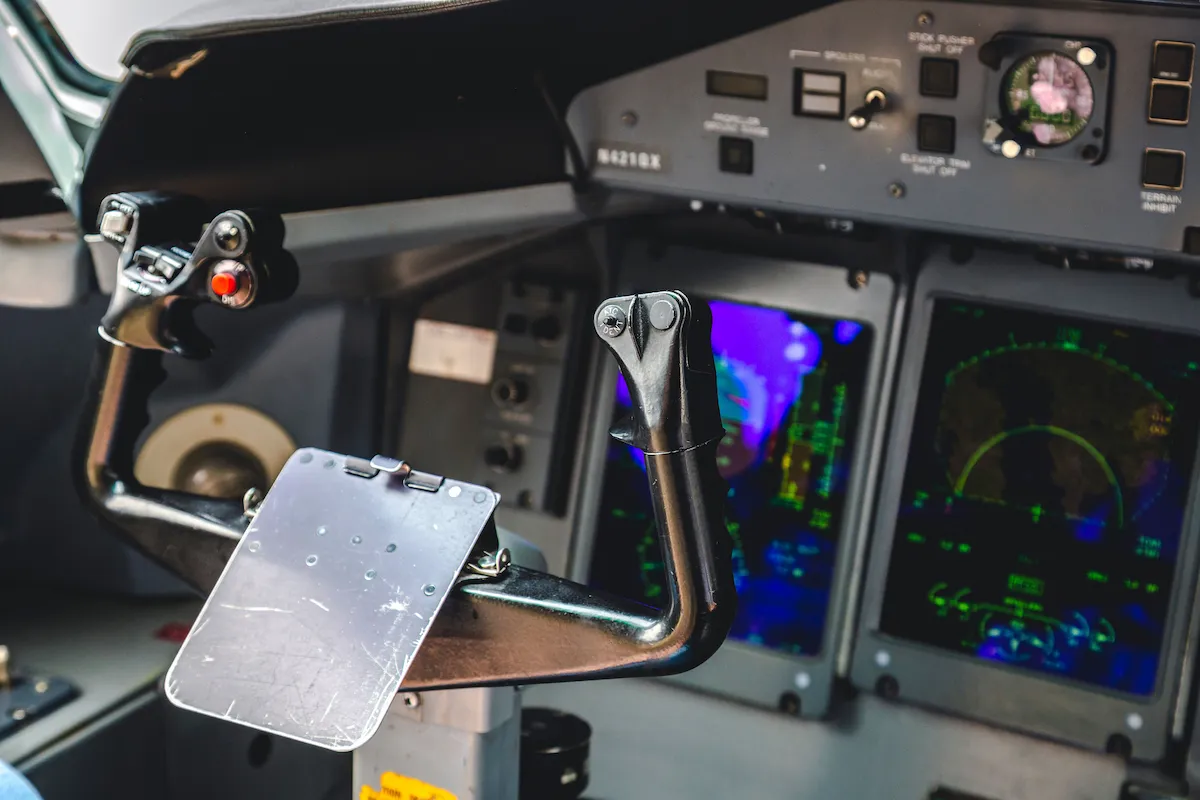
Flight mechanics explains how an aircraft responds to control inputs and external forces. It covers the axes of rotation, stability, and the control surfaces that allow pilots to maneuver safely. This guide follows the framework of the FAA Pilot's Handbook of Aeronautical Knowledge (FAA-H-8083-25).
The Three Axes of Flight
Every aircraft rotates around three axes, all passing through the center of gravity:
- Lateral axis (pitch) — controlled by the elevator. Nose up/down.
- Longitudinal axis (roll) — controlled by the ailerons. Wing up/down.
- Vertical axis (yaw) — controlled by the rudder. Nose left/right.
Stability
Stability is the aircraft's tendency to return to equilibrium after a disturbance:
- Static stability — initial tendency to return to equilibrium.
- Dynamic stability — tendency over time to return to equilibrium.
- Positive stability — returns to original state.
- Negative stability — diverges from original state.
- Neutral stability — remains in new state.
Most certified aircraft are designed with positive static and dynamic stability in all three axes, making them predictable and safe to fly.
Control Surfaces
Primary and secondary control surfaces:
| Control | Axis | Movement |
|---|---|---|
| Elevator | Lateral (pitch) | Nose up/down |
| Ailerons | Longitudinal (roll) | Wing up/down |
| Rudder | Vertical (yaw) | Nose left/right |
| Flaps | — | Increase lift and drag for takeoff/landing |
| Trim | — | Relieve control pressure |
| Spoilers/Speedbrakes | — | Reduce lift, increase drag |
Performance Fundamentals
Key performance speeds every pilot should know (from the aircraft's POH):
- VS — stall speed.
- VR — rotation speed.
- VX — best angle of climb (max altitude in shortest distance).
- VY — best rate of climb (max altitude in shortest time).
- VNE — never exceed speed.
- VFE — maximum flap extended speed.
- VA — design maneuvering speed.
- VNO — maximum structural cruising speed.
Frequently asked questions
What is the difference between VX and VY?
VX is best angle of climb (more altitude over a shorter distance). VY is best rate of climb (more altitude in less time).
What causes adverse yaw?
Adverse yaw occurs when the aileron on the rising wing creates more drag than the descending wing, causing the nose to yaw opposite the turn. Coordinated rudder input corrects it.
What is the most efficient cruise speed?
The speed where parasite drag equals induced drag — maximum L/D ratio.
Track your aircraft types and flight times
Pilot Logbook lets you record every aircraft type, speed, and maneuver you practice.
Discover Pilot Logbook →