Aviation Blog
Aircraft Fuel Calculation: A Practical Guide
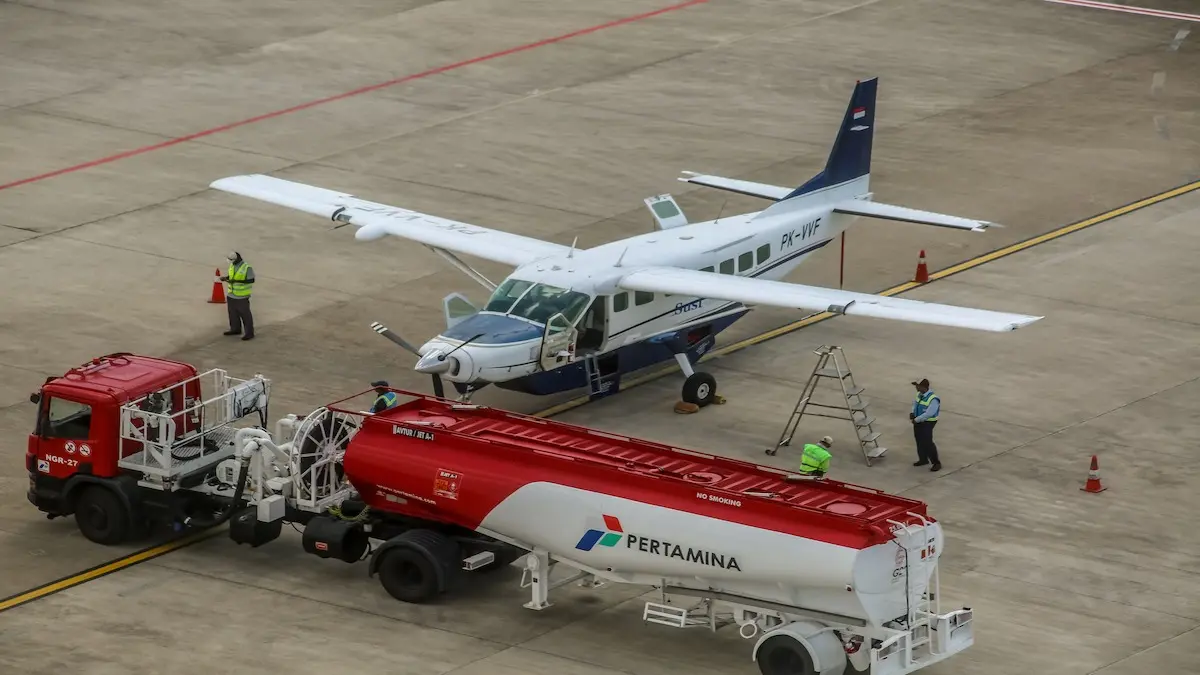
Why fuel planning matters
Fuel exhaustion remains one of the most common causes of accidents in general aviation — and it's almost always preventable. A pilot who plans fuel properly doesn't just comply with regulations; they remove one of the most dangerous variables in flight.
The 5 components of fuel planning
- Trip fuel — fuel needed to fly from departure to destination, including taxi and climb.
- Contingency fuel — typically 5% of trip fuel, to cover unforeseen winds or routing changes.
- Alternate fuel — fuel to fly from destination to your alternate airport.
- Final reserve — typically 30 minutes at holding speed, the minimum you should land with.
- Extra fuel — additional fuel at the pilot's discretion.
Step-by-step calculation
Here's the workflow for a typical VFR cross-country flight:
- Get the distance. Measure the route (nautical miles).
- Find your true airspeed (TAS). From your POH.
- Calculate time en route. Distance divided by groundspeed.
- Find the fuel burn rate. From your POH.
- Trip fuel = time × burn rate.
- Add taxi, climb, descent.
- Add contingency (5%), alternate fuel if required, and final reserve.
- Add personal extra fuel.
Worked example
Let's plan a flight in a Cessna 172:
- Route distance: 120 NM
- Cruise TAS: 115 kt
- Headwind: 10 kt → groundspeed 105 kt
- Fuel burn at cruise: 8.5 gal/h
Step 1 — Time en route: 120 NM ÷ 105 kt = 1.14 h
Step 2 — Trip fuel: 1.14 × 8.5 = 9.7 gal
Step 3 — Contingency (5%): 0.5 gal
Step 4 — Final reserve (30 min): 4.3 gal
Step 5 — Taxi, climb, descent: ~1.5 gal
Total minimum fuel: 16 gal
Pro tips
- Plan conservatively. Use the higher end of POH figures.
- Check real winds. The forecast is a forecast.
- Refuel early. Don't wait until you're low.
- Know your aircraft. Fuel burn varies with altitude, temperature, mixture.
- Verify fuel at the pump. Dipstick or gauges — never trust one alone.
- Log every flight. A good logbook tracks fuel use.
Common mistakes
- Using statute miles instead of nautical miles.
- Forgetting taxi and climb fuel.
- Assuming calm winds. Headwinds kill your range.
- Skipping the alternate.
- Flying on gauges alone.
Frequently asked questions
What's the legal fuel reserve for VFR flights?
Fuel reserve requirements depend on the applicable authority, operation, aircraft, and flight rules. Use the current official requirement for your jurisdiction rather than treating a general example as a legal minimum.
How much extra fuel should I carry?
As a rule of thumb, add 15–30 minutes of extra fuel for weather, traffic, or unfamiliar airspace.
Can I trust fuel gauges?
Never rely on gauges alone. Use a dipstick before flight, verify total fuel, and know your aircraft's gauge accuracy.
How does altitude affect fuel burn?
Higher altitudes usually reduce fuel burn in normally aspirated engines due to reduced drag. Check your POH.
Track fuel and flight data
Pilot Logbook keeps detailed records of every flight — including fuel, times, and remarks.
Discover Pilot Logbook →