Aviation Knowledge
Aerodynamics Fundamentals for Pilots
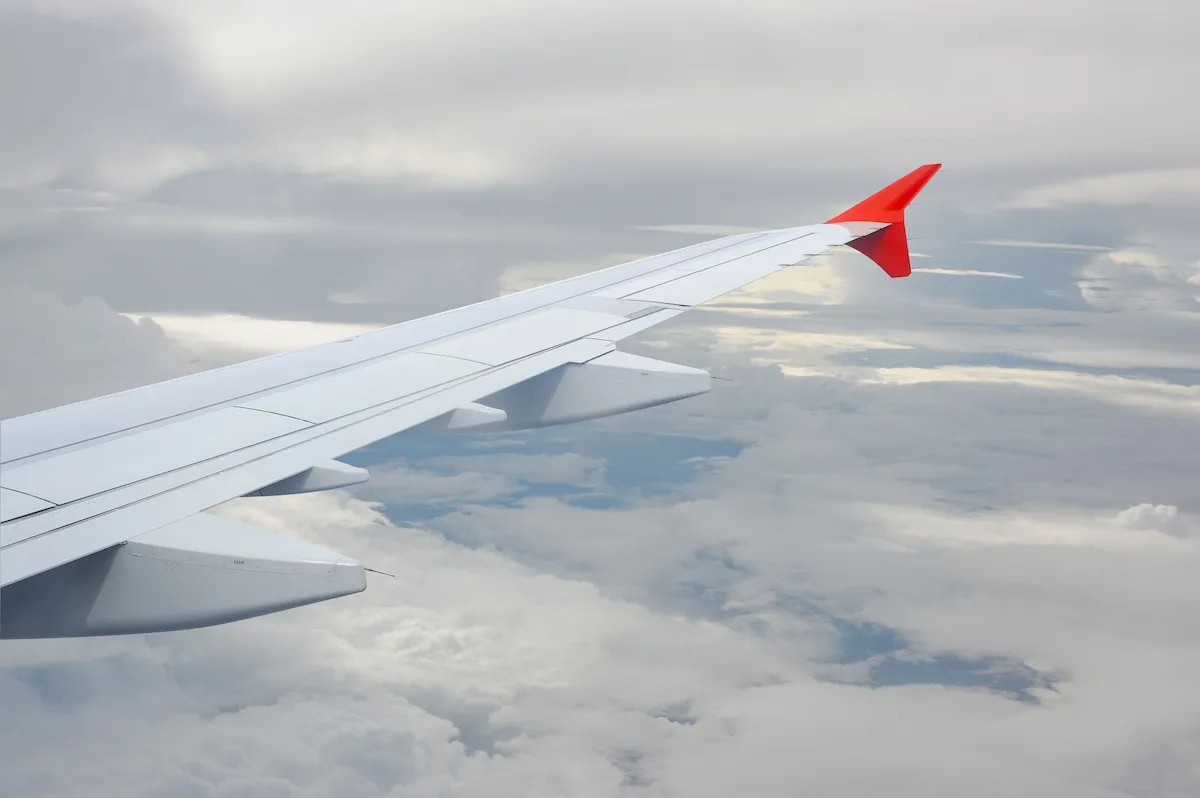
Understanding aerodynamics is essential for every pilot. It explains why an aircraft flies, how it responds to control inputs, and what happens when things go wrong. This guide covers the fundamentals every pilot should master, based on FAA-H-8083-25 and ICAO principles.
The Four Forces of Flight
Every aircraft in flight is subject to four fundamental forces:
- Lift — the upward force generated by the wings, opposing weight.
- Weight — the downward force of gravity acting on the aircraft's mass.
- Thrust — the forward force produced by the engine and propeller.
- Drag — the backward force caused by air resistance.
In straight-and-level flight at constant speed, lift equals weight and thrust equals drag. Any imbalance causes acceleration, climb, descent, or a change in speed.
How Lift Is Generated
Lift is created by the interaction between the wing and the airflow. The airfoil shape accelerates air over the top surface, reducing pressure, while higher pressure below pushes the wing upward. The result is a net aerodynamic force perpendicular to the relative wind.
The amount of lift depends on four main factors:
- Airspeed — lift increases with the square of speed.
- Air density — denser air produces more lift (higher altitude = less lift).
- Wing area — larger wings produce more lift.
- Angle of attack — up to a critical point, more AoA means more lift.
Angle of Attack and the Stall
The angle of attack (AoA) is the angle between the wing's chord line and the oncoming airflow. As AoA increases, lift increases — up to a critical point. Beyond that point, airflow separates from the wing and lift drops sharply. This is a stall.
A stall can occur at any airspeed, any attitude, and any power setting. The only thing that causes a stall is exceeding the critical angle of attack. Recovery requires reducing AoA by lowering the nose and adding power if altitude permits.
Drag: Parasite vs Induced
Drag comes in two main forms:
- Parasite drag — increases with the square of airspeed (fuselage, landing gear, antennas).
- Induced drag — a byproduct of lift generation, greatest at low airspeeds and high angles of attack.
Understanding the balance between parasite and induced drag helps you find the most efficient speed for any given flight condition. The point where they are equal is called L/Dmax, the maximum lift-to-drag ratio.
Summary Table
| Force | Direction | Generated by |
|---|---|---|
| Lift | Perpendicular to relative wind | Wings (airfoil) |
| Weight | Downward (gravity) | Aircraft mass |
| Thrust | Forward | Engine / propeller |
| Drag | Backward | Air resistance |
Frequently asked questions
Can a stall occur at any airspeed?
Yes. A stall is caused by exceeding the critical angle of attack, not by a specific airspeed. It can happen at any speed and any attitude.
What is the most efficient speed for cruise?
The speed where parasite drag and induced drag are equal — this is the maximum lift-to-drag ratio (L/Dmax), where the aircraft is most aerodynamically efficient.
How does altitude affect lift?
Air density decreases with altitude, so the wing must fly faster (higher true airspeed) to generate the same lift at a given angle of attack.
Track your training progress
Pilot Logbook helps you record every flight, including the maneuvers and conditions you practice.
Discover Pilot Logbook →