Aviation Knowledge
Air Traffic Control & Airspace
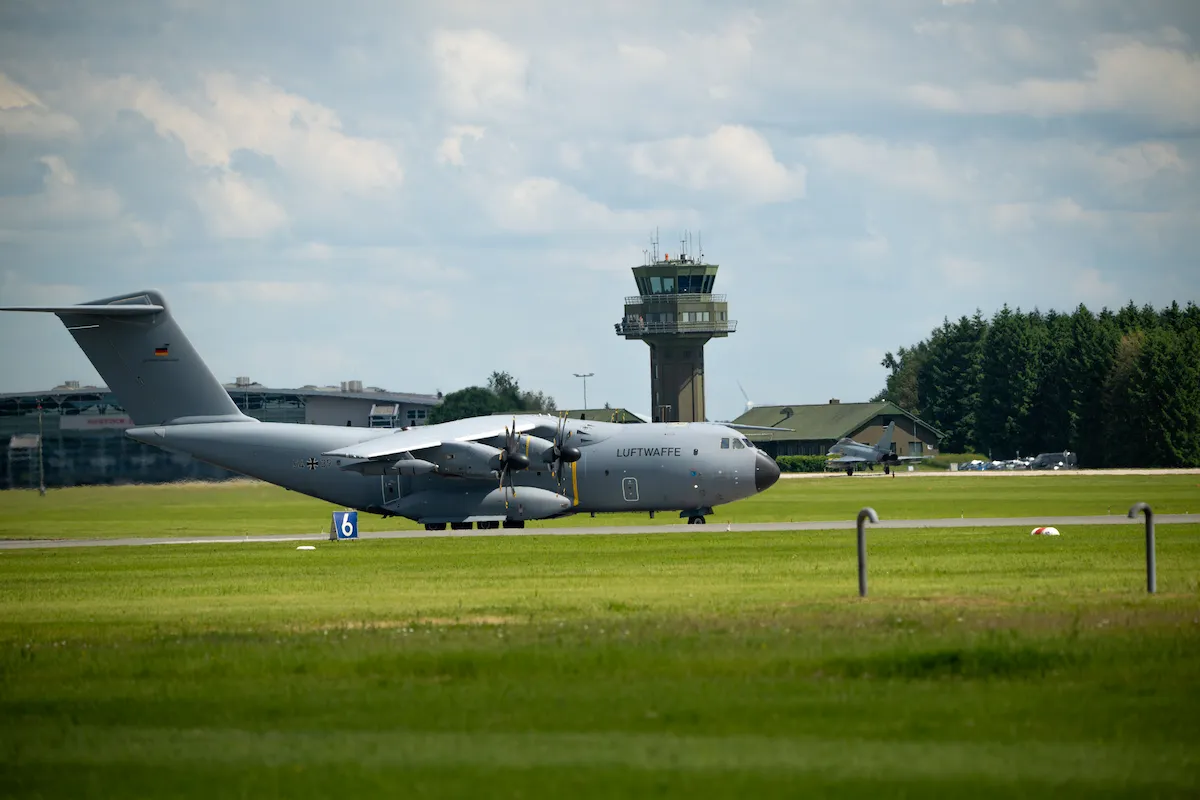
Air traffic control (ATC) is the invisible infrastructure that keeps aviation safe. Every day, ATC controllers coordinate thousands of flights, ensuring separation between aircraft and providing vital information to pilots. This guide covers the fundamentals based on ICAO Annex 11 and Doc 4444.
Airspace Classes
ICAO classifies airspace into seven classes (A through G), each with different rules for IFR and VFR flights, and different requirements for pilot qualification and ATC clearance.
| Class | IFR | VFR | ATC Clearance |
|---|---|---|---|
| A | Yes | No | Required for all |
| B | Yes | Yes | Required for all |
| C | Yes | Yes | Required for all |
| D | Yes | Yes | Required for all |
| E | Yes | Yes | IFR only |
| F | Yes | Yes | IFR only (advisory) |
| G | Yes | Yes | None |
Note: In the United States, the airspace system uses a similar but not identical classification. Class A in the US is above 18,000 ft MSL, IFR only. Class G is uncontrolled.
ATC Services
ATC provides three main services:
- Air Traffic Control Service — prevents collisions between aircraft and expedites traffic flow.
- Flight Information Service — provides weather, traffic, and operational information.
- Alerting Service — notifies search and rescue organizations when an aircraft is in distress.
ATC Clearances
An ATC clearance is an authorization for an aircraft to proceed under specified conditions. It typically includes:
- Aircraft identification — who the clearance is for.
- Clearance limit — the point to which the aircraft is cleared.
- Route — the path to follow.
- Altitude — the assigned level.
- Other instructions — speed, heading, etc.
Important: A clearance is not an instruction to violate the rules of the air. Pilots must still maintain see-and-avoid responsibility in VMC.
Separation Standards
ATC ensures separation between aircraft using:
- Vertical separation — minimum 1,000 ft between aircraft above FL290 (with RVSM), or 2,000 ft below.
- Horizontal separation — lateral (distance) or longitudinal (time or distance along the same track).
Standard Phraseology
Standard phraseology reduces misunderstanding. Examples:
- ROGER — I have received your message.
- WILCO — I understand and will comply.
- STANDBY — Wait, I will call you.
- CLEARED FOR TAKEOFF — Authorization to depart.
- LINE UP AND WAIT — Enter the runway but do not take off.
- SAY AGAIN — Repeat your last transmission.
Frequently asked questions
Do I need a clearance in Class G airspace?
No. Class G is uncontrolled airspace. However, you are still responsible for see-and-avoid and should monitor the appropriate frequency.
What is RVSM?
Reduced Vertical Separation Minimum. It allows 1,000 ft vertical separation between aircraft above FL290, increasing airspace capacity.
What is the difference between ATC and FIS?
ATC provides control (clearances, separation). FIS (Flight Information Service) provides information (weather, traffic, airfield status) but not control.
Log your flights with precision
Pilot Logbook helps you record every flight, including route, altitude, and conditions.
Discover Pilot Logbook →